Your AI Agent's Bill Keeps Climbing and Nobody Can Say Why
Your AI agent's bill went up again this month. Nobody on the team can say exactly why. That is not a pricing problem. It is a visibility problem.
The old approach was to multiply tokens by list price and call it a forecast. The modern approach looks more like auditing a webhook that passed every test and was still wrong — what matters is what actually happened on the call, not what the spec assumed would happen.
Why Per-Token Math Stops Working Once an Agent Starts Acting
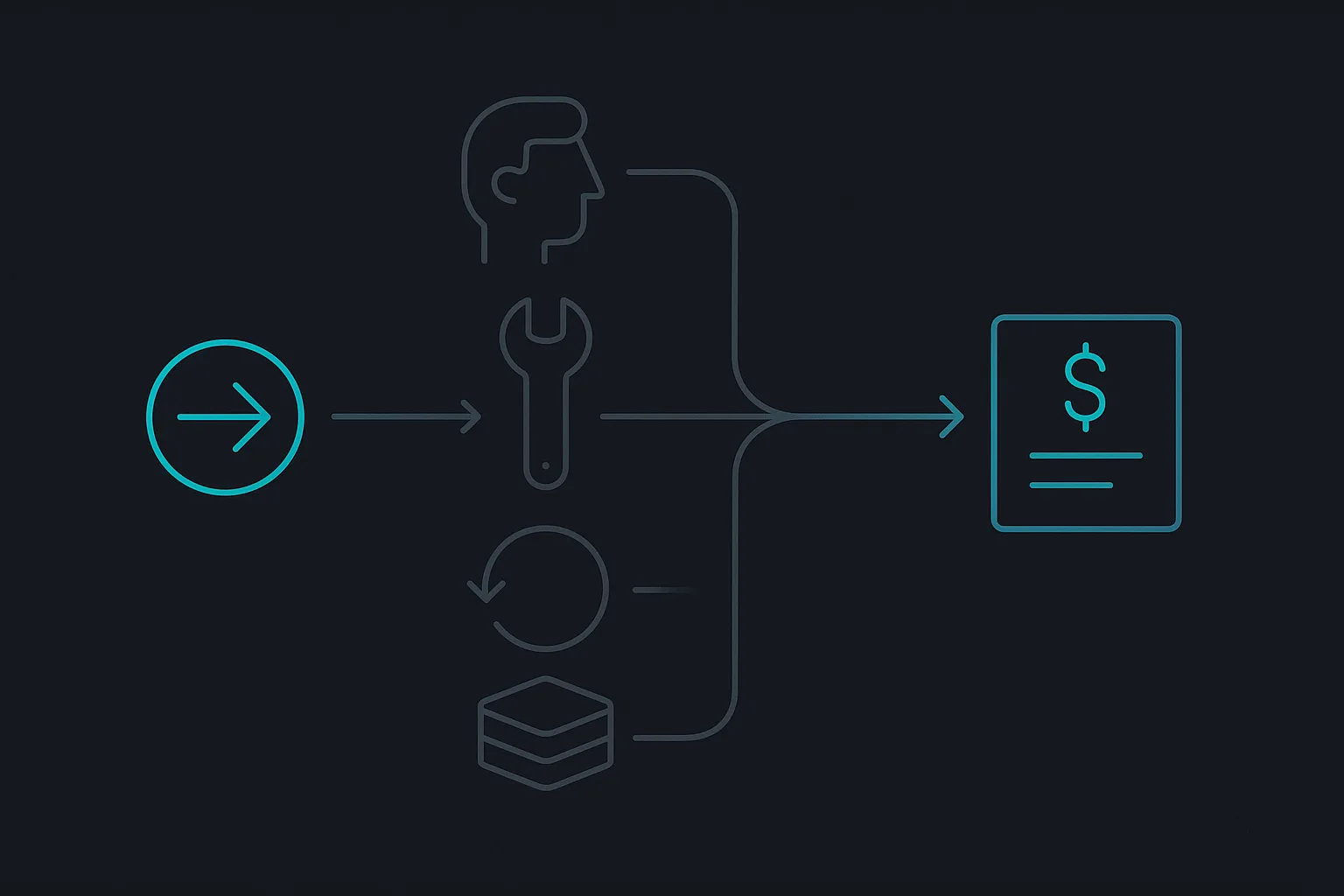
A pricing calculator assumes one prompt, one completion, one number. An agent stops being that simple once it can call tools, retry, and hand work to another model:
- Retries — a failed tool call gets silently retried, and every attempt is billed even though only one produced anything useful.
- Chained sub-agent calls — one user request can trigger several model calls under the hood, none of which show up as a separate line anywhere.
- Context growth — the same conversation gets re-sent on every turn, so a long session pays for its own history again and again.
- Uncapped tool loops — an agent "double-checking" its own answer has no natural stopping point unless the system gives it one.
None of that shows up in a per-token price sheet, because a price sheet describes the model, not the call — the same reason a real MVP costs what it costs rather than what a rate card implies.
What a Real Per-Call Cost Matrix Actually Tracks
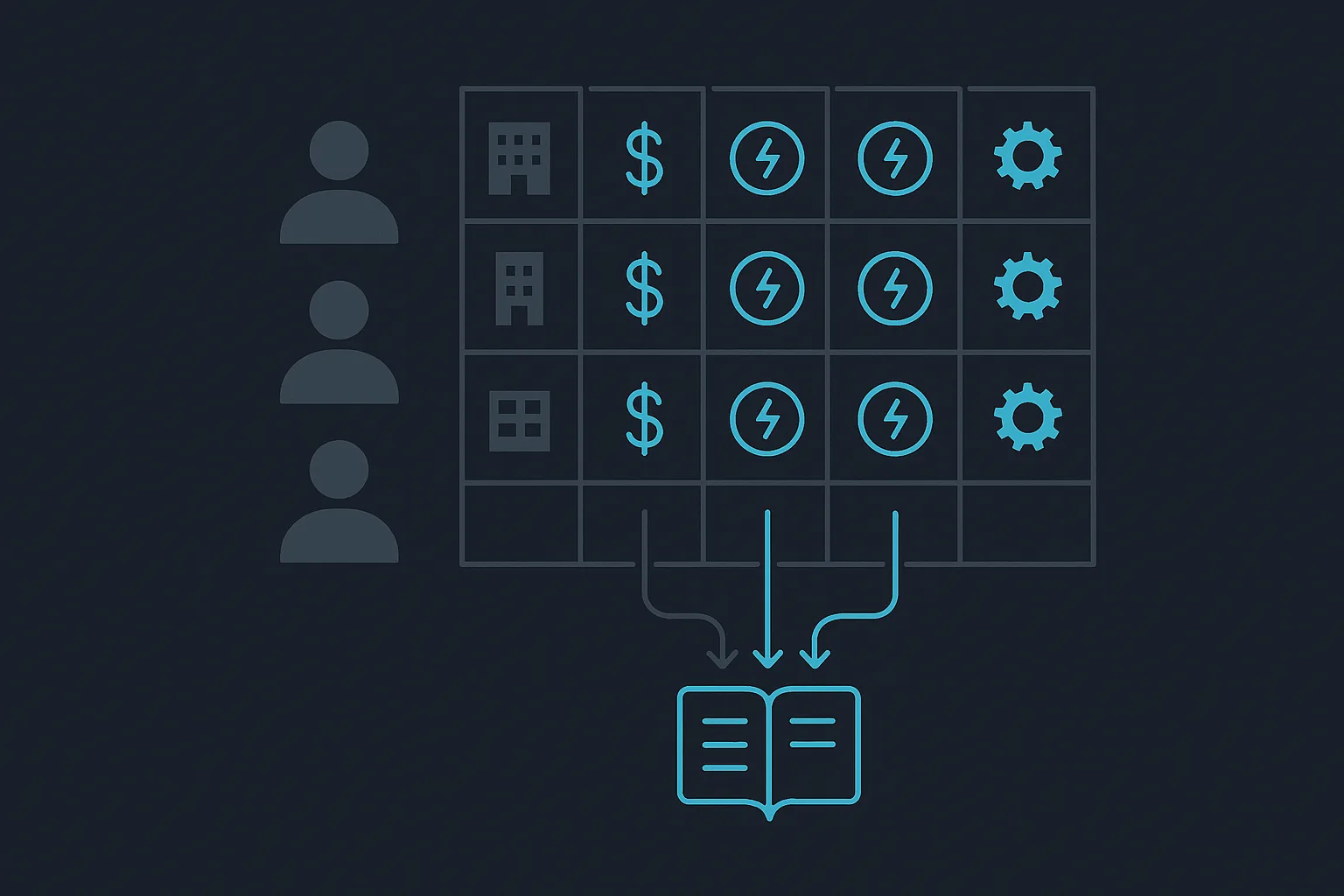
A cost matrix is not a spreadsheet of published token prices. It is a ledger that records, per call: which model handled it, how many input and output tokens it actually used, what any tool calls cost on top of that, which tenant it belongs to, and the margin left once real cost is subtracted from price.
We built exactly this into Azno, a multi-tenant BYOK platform, because guessing at margin after the fact is not a strategy. Every call writes its own row — model, tokens, tool cost, tenant, and the delta between cost and price. The shape of the ledger is the point here, not any dollar figure in it.
Can You See the Cost Before You Charge For It?
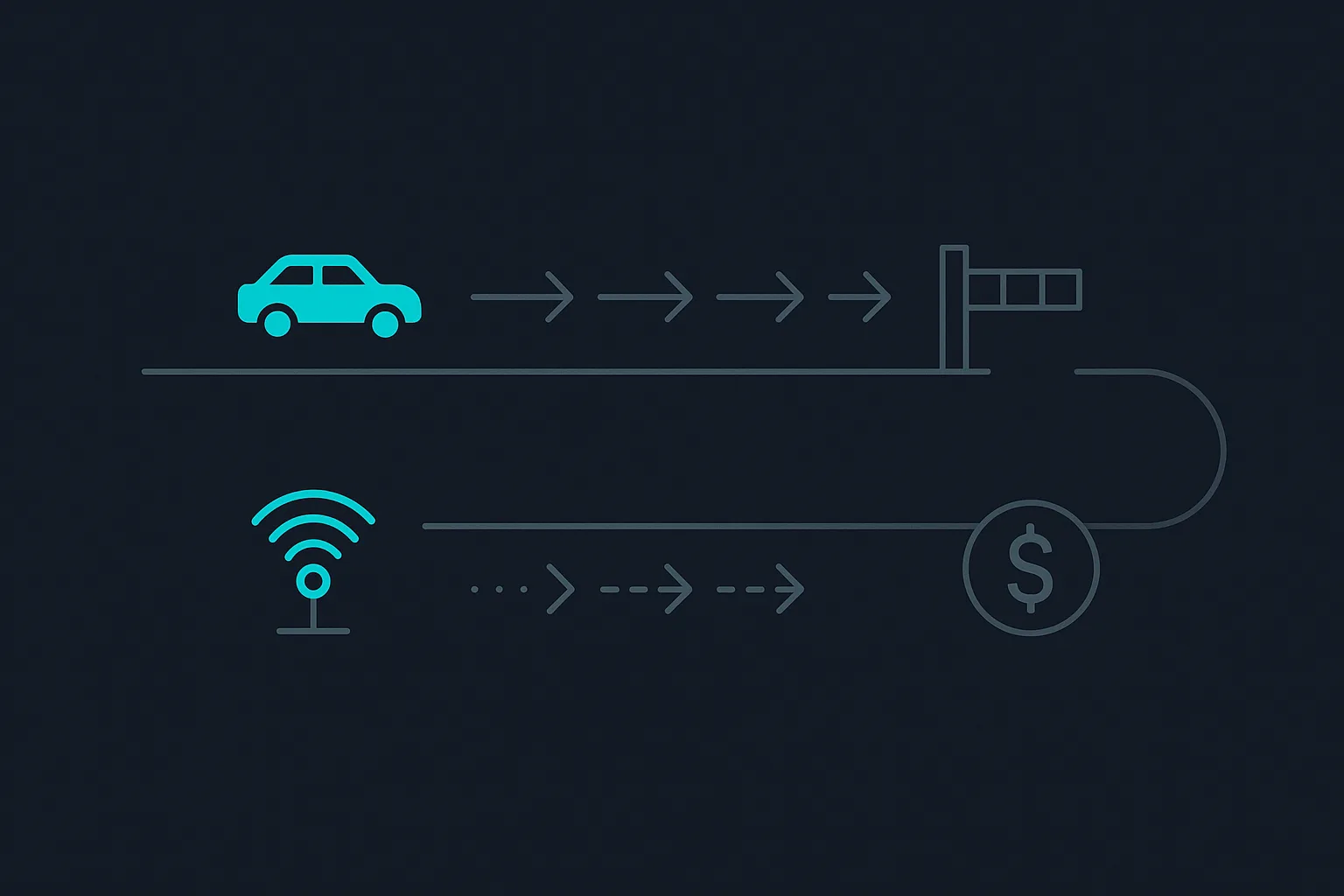
Most teams turn on billing and hope the numbers make sense once real usage arrives. Azno runs a shadow mode first — every call is metered exactly as it would be billed, without a charge going out. The cost matrix gets sanity-checked against real traffic before a single customer sees an invoice built on assumptions.
A cost matrix is not a spreadsheet of token prices. It is a ledger that can tell you, for one specific call, exactly what it cost, who it belongs to, and whether the price you charge still covers it.
That instinct matches treating AI governance as a technical control, not a policy document — a budget ceiling only helps if the system can see its own numbers in real time, not at month end.
Multi-Tenant Doesn't Halve the Problem. It Multiplies It.
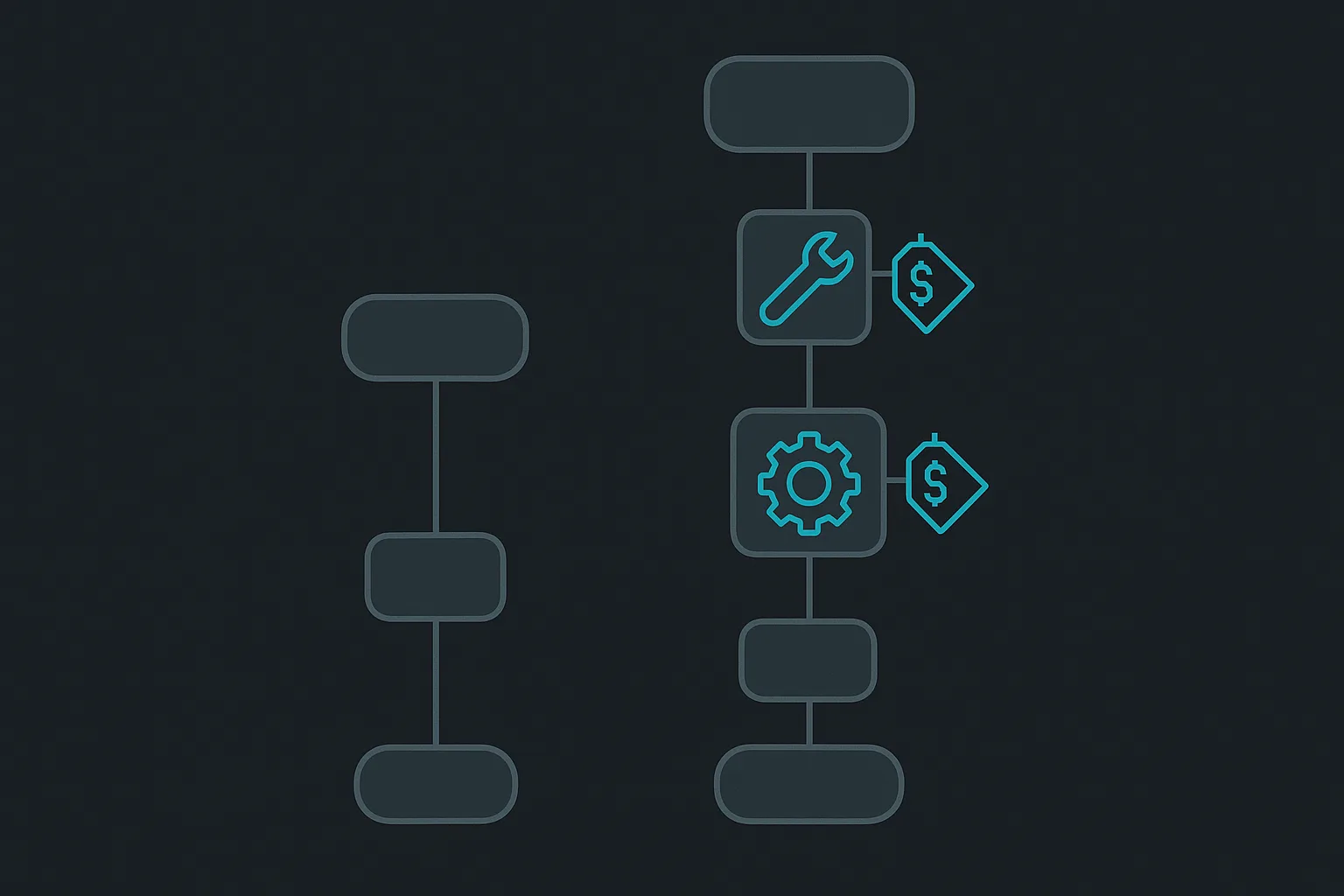
Run the same agent for ten customers and the average cost tells you almost nothing. One tenant's usage might be light single-turn questions; another's might be long, tool-heavy sessions. Without per-tenant attribution, you cannot tell which customers are profitable and which are quietly subsidized by the rest — the same blind spot behind a support system that answers confidently without knowing when to escalate.
Why "Just Switch to a Cheaper Model" Doesn't Fix This
Swapping to a cheaper model moves the number on the invoice. It doesn't answer why the bill climbed or where. A cheaper model still retries, still chains sub-agent calls, still carries a growing context — the same failure mode a stale RAG index eventually runs into, just at a lower price per token. A smaller bill you still can't explain isn't a fix.
A Four-Week Way to Get Visibility Before You Touch Pricing
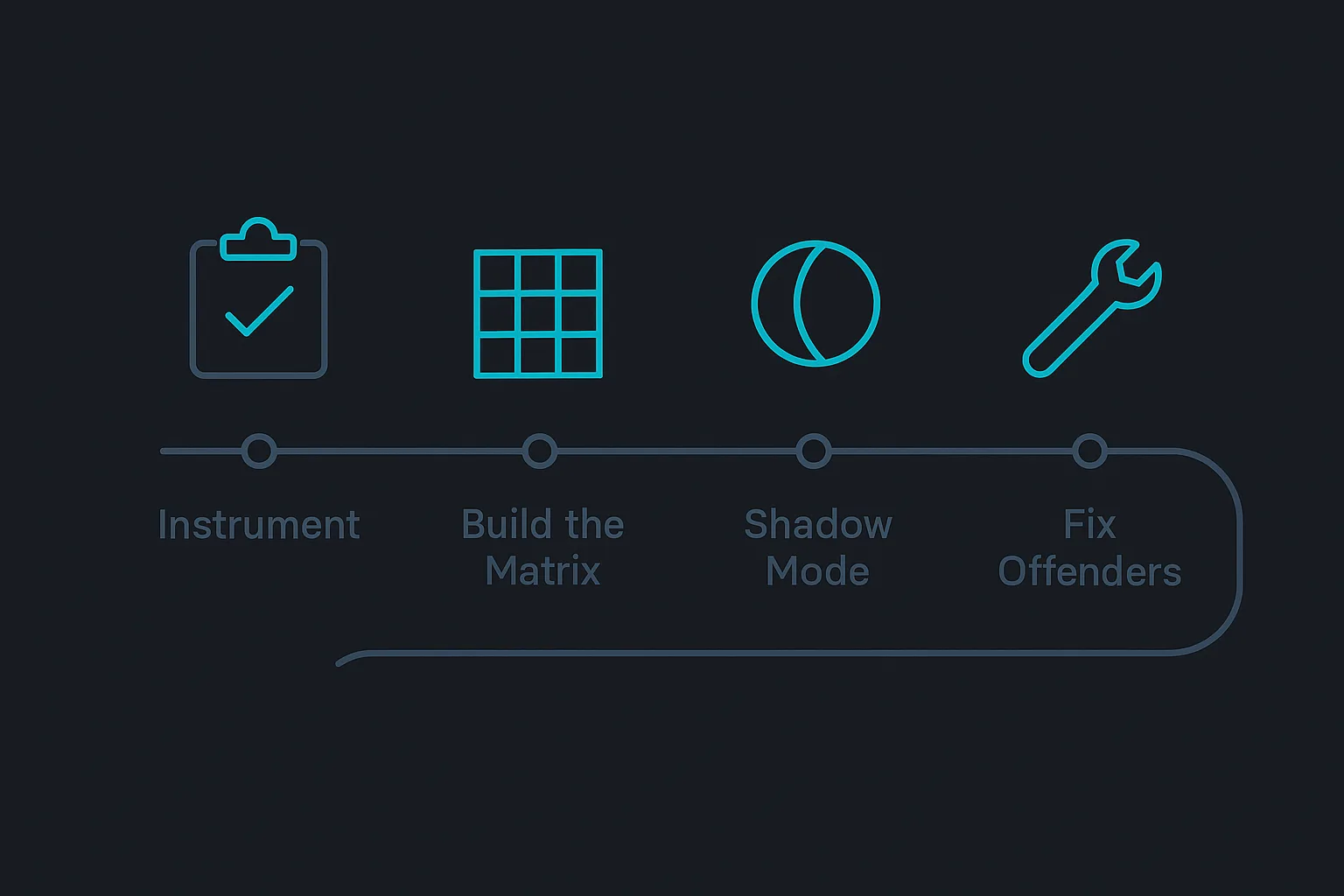
Week 1 — Instrument every call: model, tokens, and every tool invocation, not just the top-level user-facing action.
Week 2 — Build the matrix: turn raw logs into a per-call, per-tenant ledger showing cost and margin.
Week 3 — Run it in shadow mode: meter real traffic without changing anyone's bill, and find the calls costing far more than the rest.
Week 4 — Fix the worst offenders first: cap runaway tool loops, dedupe retries, then decide whether pricing itself needs to change.
What to Measure Instead of Guessing
- Cost per call, split into model cost, tool cost, and retries — not one blended number.
- Cost per tenant, so you know who is profitable before a renewal conversation.
- The gap between shadow-mode cost and what you'd actually charge, tracked over time.
The same discipline behind an agent security audit that finds real bugs instead of theoretical ones applies here: you cannot manage what you have never actually measured.
If You Want ZPro to Build This With You
At Zdravevski Professionals, an AI Systems Audit builds this kind of visibility into an existing AI feature before you touch a single price. We can:
- instrument every call your agent makes, including the ones hidden inside tool loops and sub-agent chains
- build a per-call, per-tenant cost matrix that shows real margin, not an average
- run it in shadow mode against live traffic before anything changes for a real customer
- hand you a system that can answer "why did this cost what it cost" on any single call, not just at month end