
AI Governance for Small Teams: A Practical Policy That Won’t Kill Innovation
AI adoption is moving faster than most companies can manage.
One week your team is using ChatGPT to rewrite emails. The next week someone pastes a customer contract into an AI tool “just to summarize it.” Now you’re one mistake away from a privacy incident, reputational damage, or compliance headaches.
The solution isn’t banning AI. It’s creating lightweight AI governance: simple rules, clear boundaries, and repeatable workflows.
If you’re still thinking about AI mostly as automation, start here first: The Future of AI in Business: Beyond Automation. Governance is what allows augmentation at scale—without chaos.
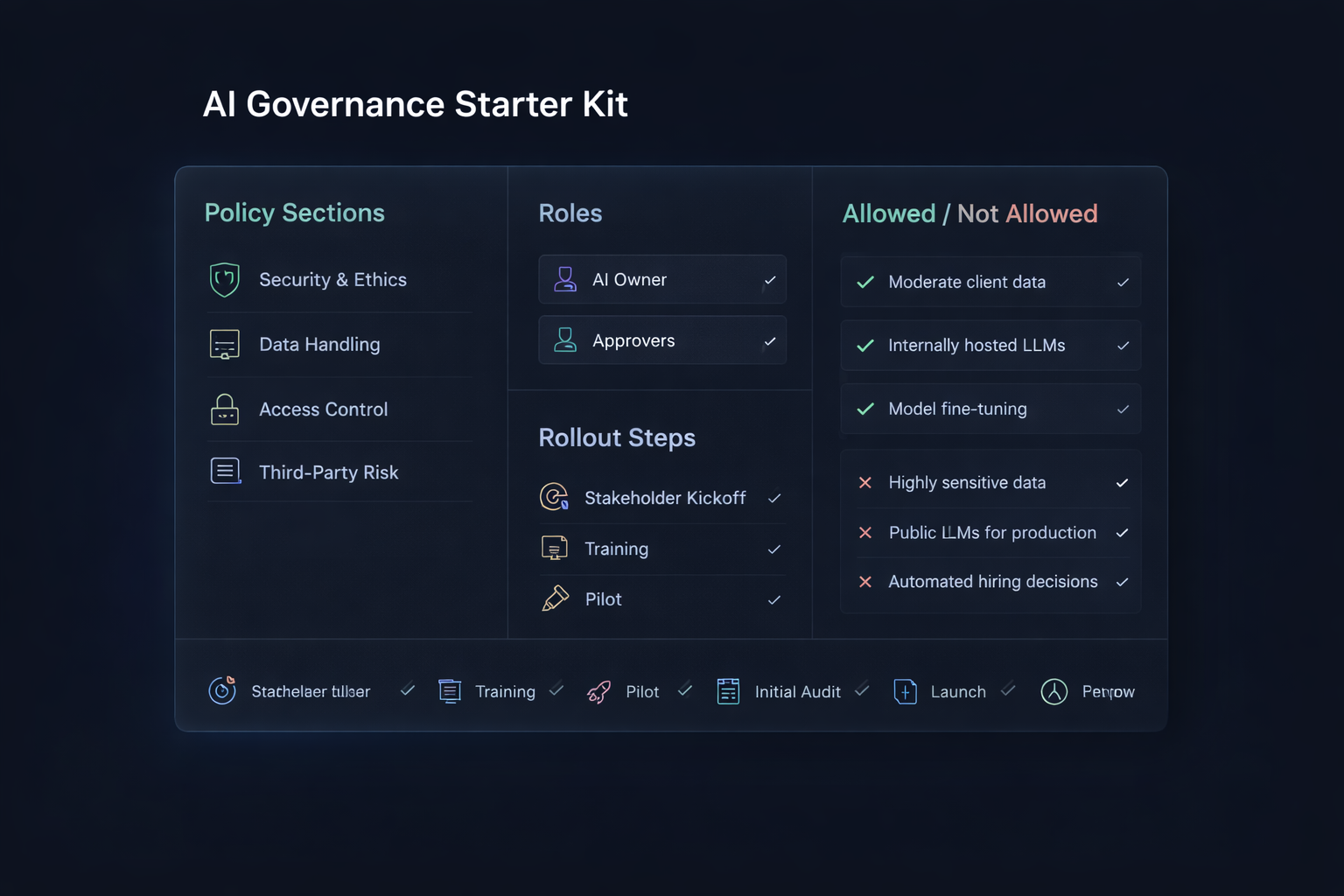
What “AI Governance” Actually Means (In Plain English)
AI governance is just:
How your company decides what AI is allowed to do, what data it can touch, who is accountable, and how you reduce risk.
Not meetings. Not bureaucracy. Not fear.
Governance becomes a competitive advantage when it’s short, practical, and enforceable.
And if your team is remote-first, it’s even more important—because AI workflows spread instantly. (Related: Remote-First Culture: Building High-Performance Teams Across Time Zones)
The Minimum Viable AI Policy (Copy This)
Here’s the smallest policy that actually works for small teams (5–50 people). Keep it to one page.
1) Allowed Use Cases (Safe + High Value)
Examples:
- Drafting marketing copy and social posts
- Summarizing internal docs that contain no sensitive data
- Brainstorming product ideas
- Generating code snippets without secrets (keys, tokens, customer data)
2) Not Allowed (Hard No)
- Pasting customer personal data (PII) into public AI tools
- Uploading private contracts, payroll, medical or legal documents
- Sharing API keys, database dumps, internal credentials
- Using AI outputs as “final truth” for legal, financial, or HR decisions
3) “Yellow Zone” (Allowed With Rules)
- Customer support summaries (must remove identifiers)
- Sales call notes (must redact sensitive details)
- Internal strategy documents (only with approved tools / enterprise accounts)
4) Tooling Rules
- Approved AI tools list (with who owns vendor relationship)
- Where AI logs are stored (and retention policy)
- Who can connect integrations (Slack/Drive/Notion/GitHub)
5) Accountability
- One owner (even part-time): AI steward / security lead
- Escalation path: “If unsure, ask X.”
If you want to make this operational (not just a PDF), pair it with a searchable internal knowledge layer like we describe in: AI Second Brains at Work.
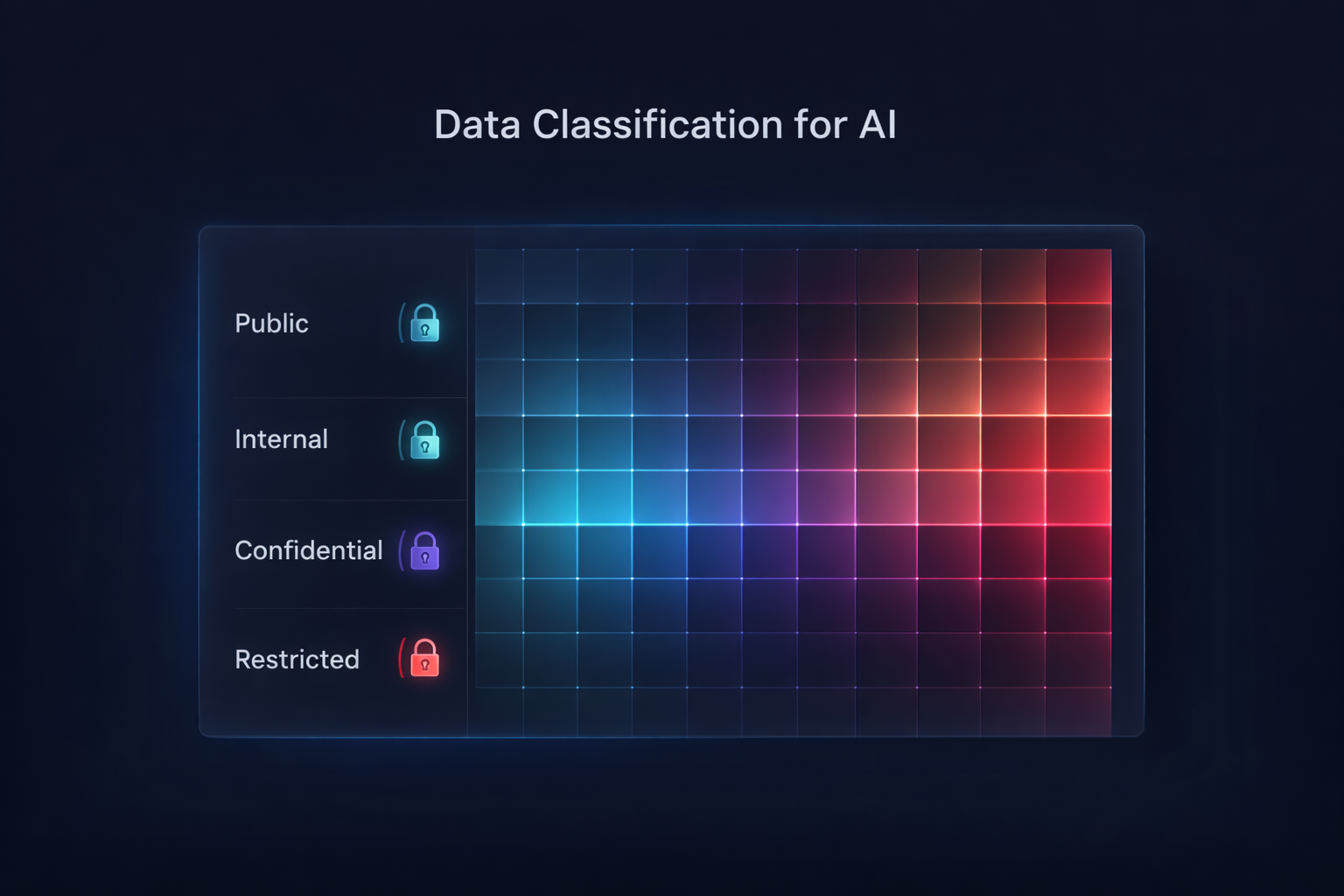
Step 1: Classify Your Data (In 20 Minutes)
Most AI risk is just data risk.
Use a simple 4-tier system:
- Public (website content, marketing pages)
- Internal (process docs, non-sensitive planning)
- Confidential (pricing strategy, customer communications, codebase)
- Restricted (PII, contracts, credentials, financials, HR)
Then set one rule:
- Public/Internal → OK for approved AI tools
- Confidential → OK only in enterprise/self-hosted or redacted
- Restricted → NEVER into external tools
For a structured risk approach, align this with NIST AI RMF (very practical): NIST AI Risk Management Framework (AI RMF)
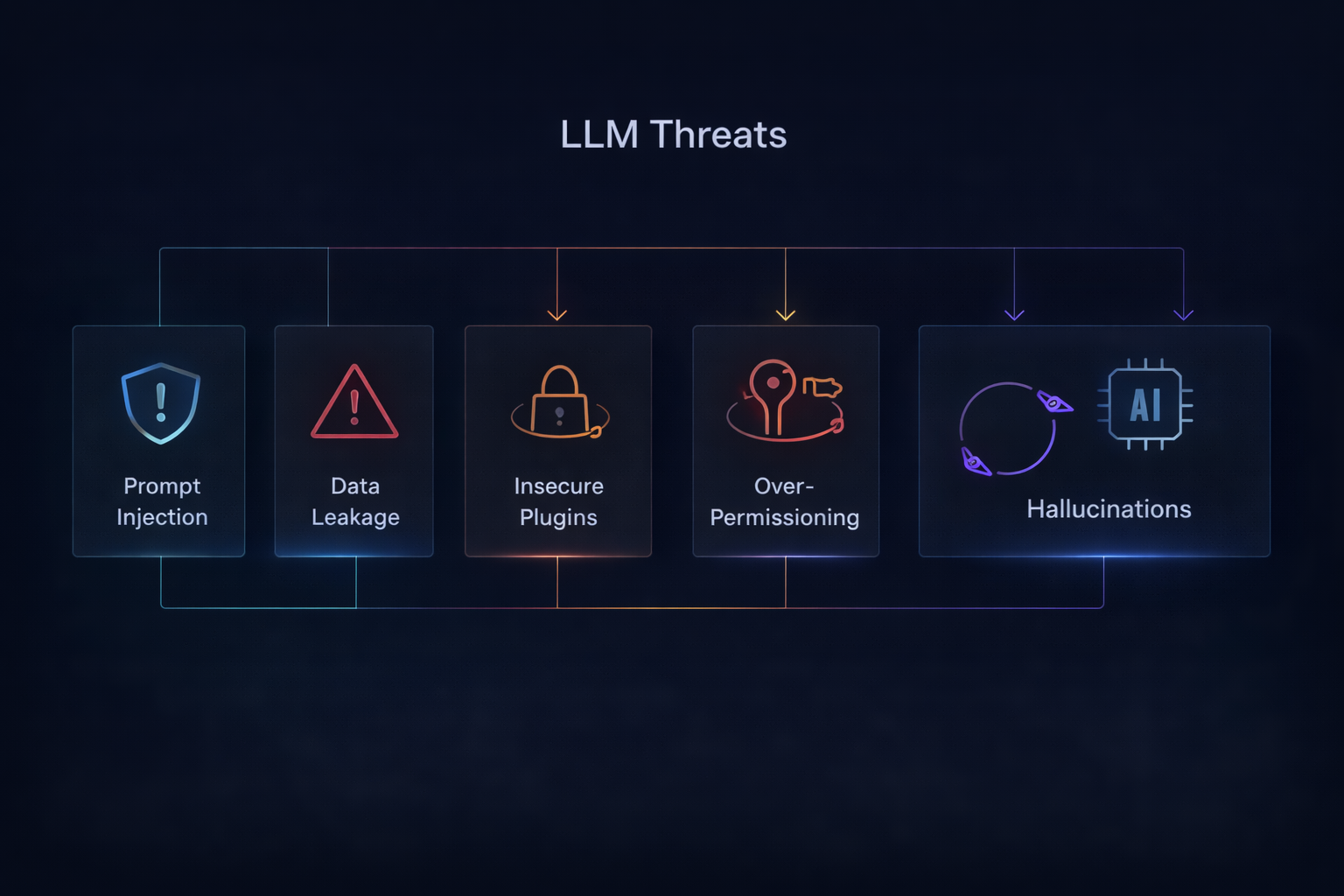
Step 2: Handle the Real Threats (Not the Imaginary Ones)
Teams worry about “AI taking jobs.” The real risks are more boring—and more dangerous:
- Prompt injection (AI gets tricked into leaking secrets)
- Data leakage (sensitive info ends up in logs or training)
- Over-trust / hallucinations (wrong answers treated as fact)
- Plugin/integration abuse (AI gets access to systems it shouldn’t)
A strong baseline is the OWASP Top 10 for LLM Applications:
OWASP Top 10 for LLM Apps
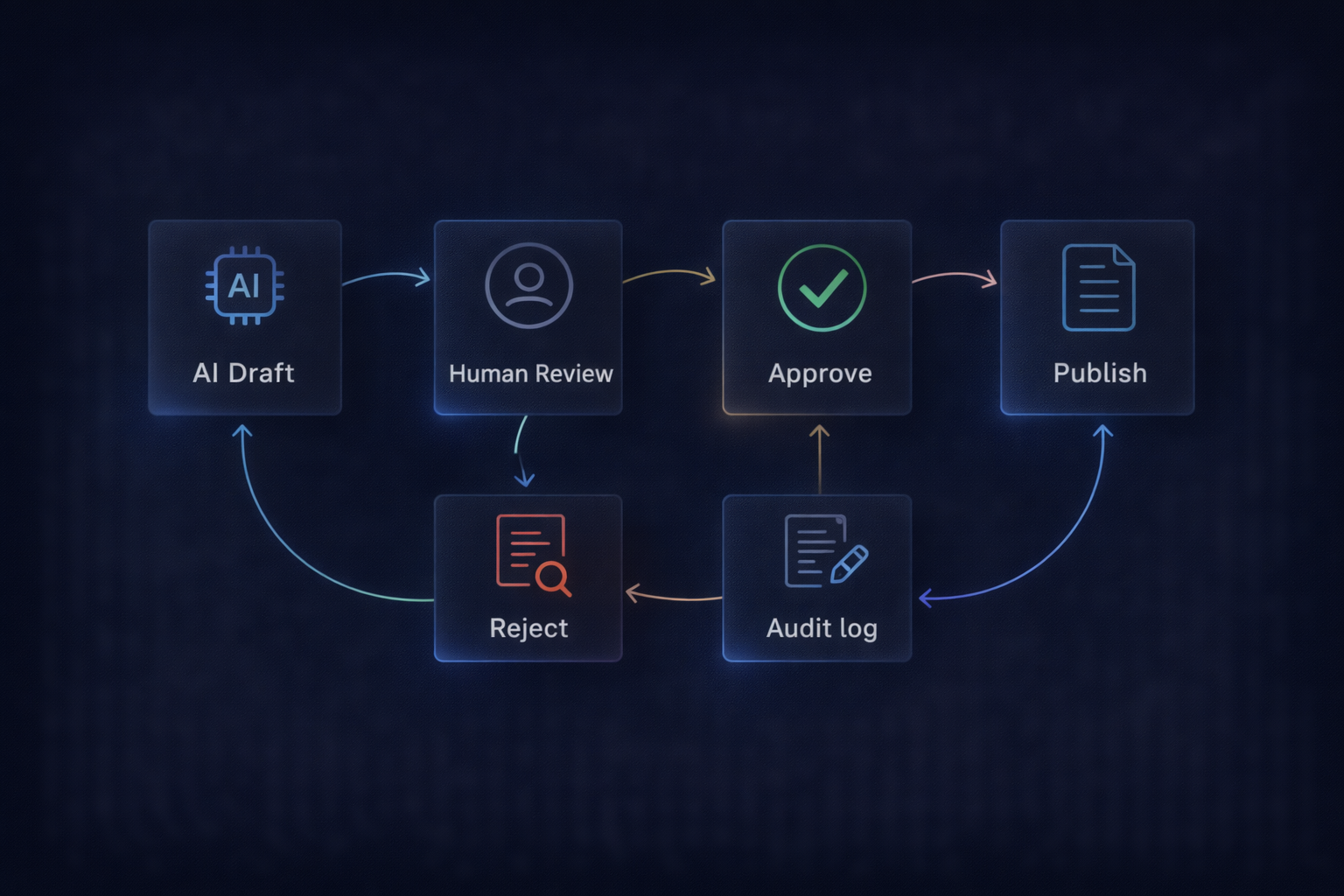
Step 3: Add Human Review Where It Matters
Your rule should be:
AI can draft. Humans approve.
Especially for:
- money, contracts, legal claims
- HR decisions
- customer commitments
- security-related changes
This is the same “AI co-pilot, human editor” principle we use in both strategy and execution. (Related: Strategic Problem-Solving Framework)
Step 4: Pick Vendors Like a Pro (Even If You’re a Small Team)
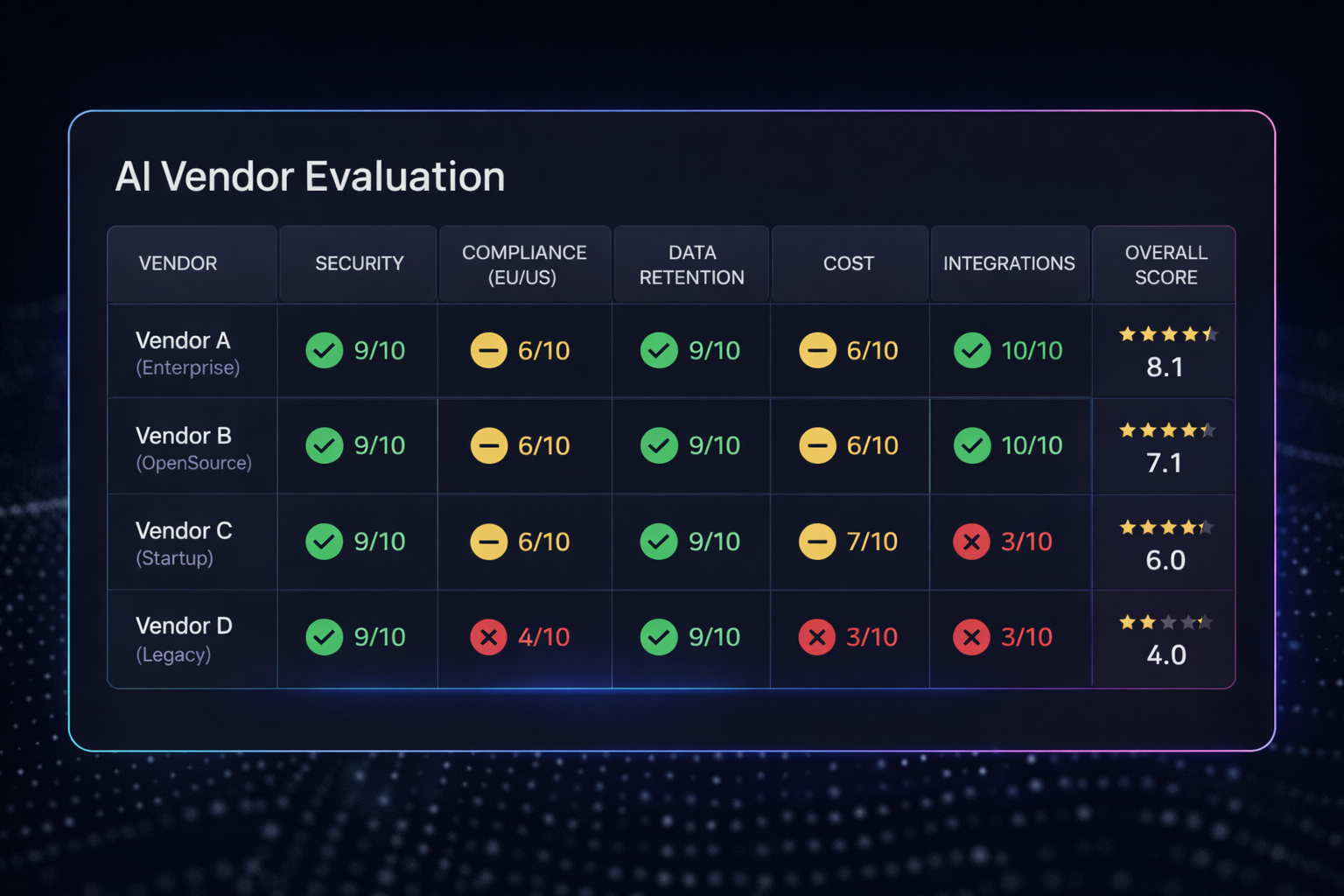
Use a scorecard. Don’t vibe-check.
Evaluate:
- Data retention & training usage (do they train on your data?)
- Enterprise controls (SSO, RBAC, audit logs)
- Region & compliance alignment (EU/US)
- Model transparency & safety controls
- Integration permissions and least-privilege access
If you operate in the EU market, track the evolving compliance expectations around the AI Act (practical summaries like this help teams stay aware):
EU AI Act overview (European Commission)
A Simple Rollout Plan (That Doesn’t Slow You Down)
Week 1
- Publish the 1-page policy
- Approve 1–2 tools
- Set up a redaction checklist
Week 2
- Train the team (30 minutes)
- Add a “yellow zone” workflow (review + logs)
Week 3
- Start measuring: time saved, errors caught, adoption
Week 4
- Connect it to your internal knowledge system (docs/search/second brain)
That last part is where governance stops being “security theater” and becomes compounded leverage.
If You Want Help Setting This Up
At Zdravevski Professionals, we help teams deploy AI in a way that’s fast and safe:
- AI policy + vendor selection
- internal AI assistants + second brains
- secure workflows + approvals
- training + adoption systems
👉 Get in touch with us and we’ll help you ship AI without the risk.