
Callers Can Tell Your AI Receptionist Is Faking It
Callers can tell in the first three seconds. Not from the voice — from the timing.
The agent talks over them, or waits a half-beat too long after they've finished, and the illusion breaks.
It's the same underneath-the-surface gap why your AI agent's bill keeps climbing covers for cost: everyone explains the feature, almost nobody explains the pipeline underneath it.
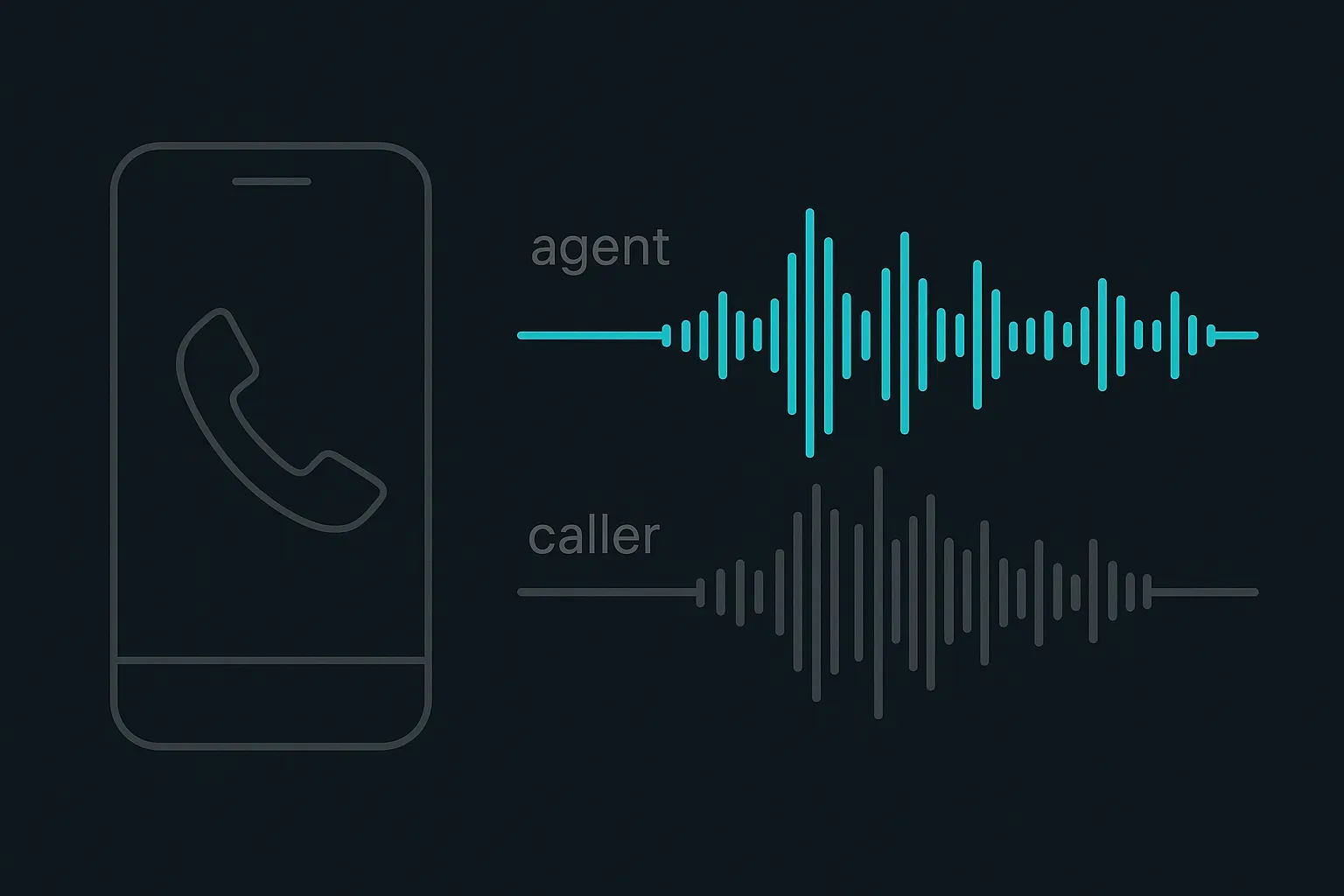
What "Sounds Robotic" Actually Means (It's Not the Voice)
Text-to-speech quality stopped being the bottleneck years ago. What still gives an AI receptionist away is timing:
- Talking over a caller mid-sentence — the agent didn't hear the interruption, or heard it too late.
- A dead-air gap after every caller turn, while the system decides they're actually done.
- Never recovering cleanly once two voices overlap, so the next response is built on a garbled mix of both.
That's four engineering problems stacked on top of each other, and most coverage explains only one at a time.
Why Every Voice AI Guide Explains This The Same Way
Search "AI receptionist sounds robotic" or "AI phone agent interrupts callers" and the results are agency and platform blogs, the same ranking gap a chatbot-versus-FAQ decision runs into: barge-in matters, here's roughly how detection works, talk to sales — written by companies reselling the feature, the same proof-of-work gap that shows up whenever the author is the vendor, not the operator.
Barge-in isn't one feature. It's four systems — detection, echo cancellation, wake word, and diarization — agreeing with each other in under 200 milliseconds, on a phone line that was never designed for any of it.
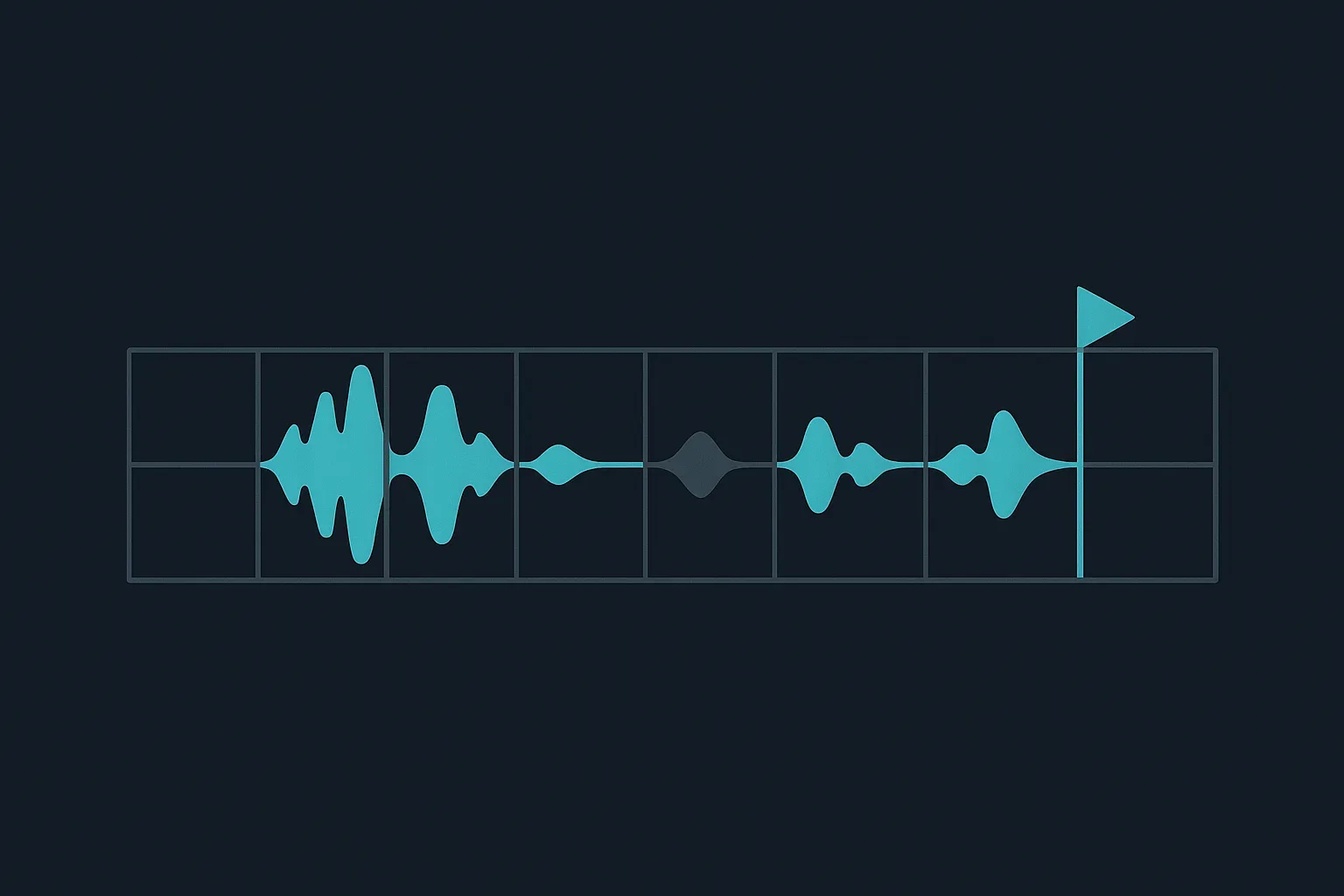
Voice Activity Detection And Endpointing (The Part That Decides When You're Done Talking)
Voice activity detection classifies incoming audio, frame by frame, as speech or silence. Endpointing goes further: it looks at what was said, not just whether sound is present, to judge if a sentence is finished or just paused for breath. Get it wrong and the agent either cuts a caller off mid-thought, or leaves silence long enough that they assume the line dropped.
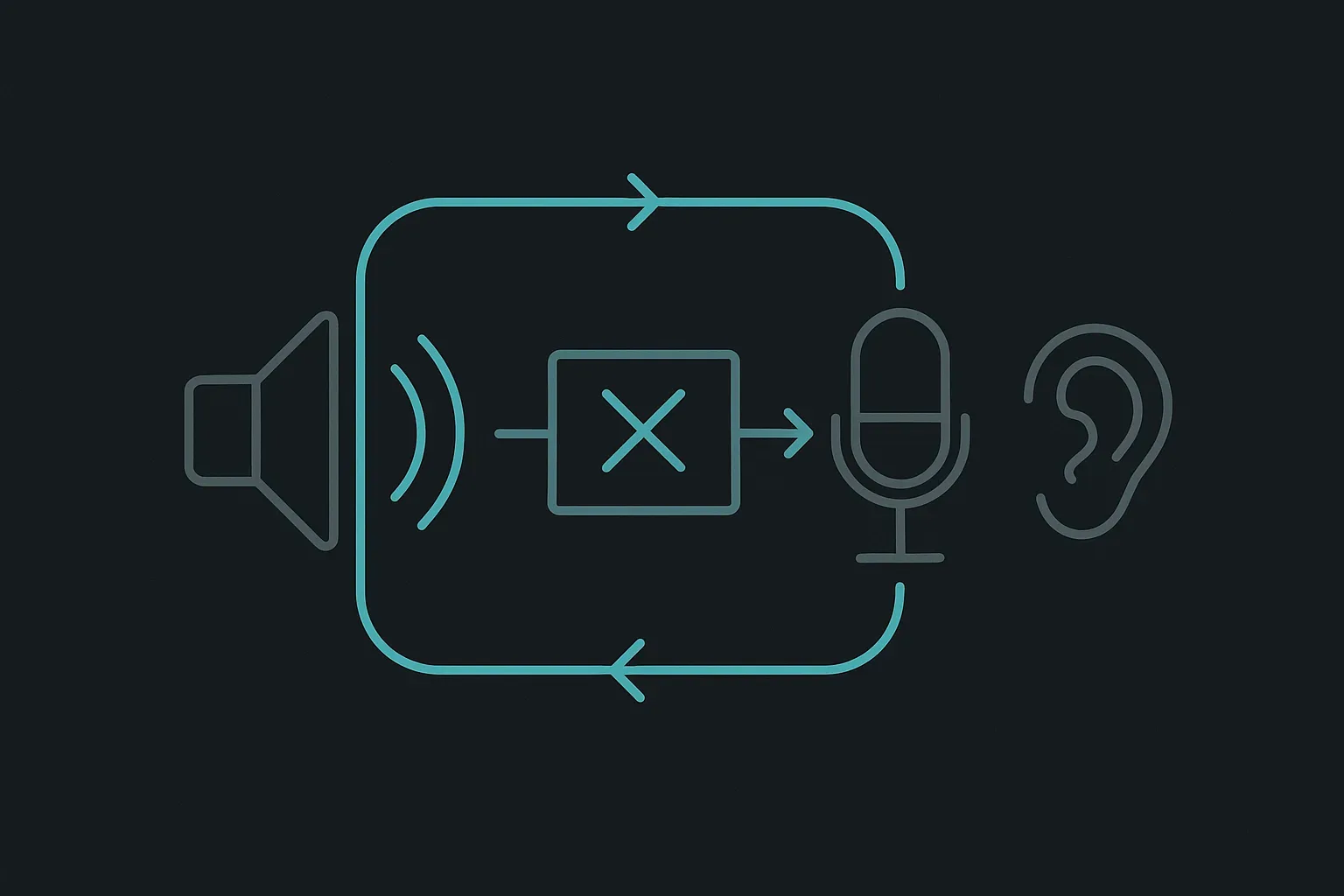
Acoustic Echo Cancellation (Why The Agent Hears Itself Talking Over You)
On a phone call, the agent's own voice comes back through the caller's speaker into their microphone a fraction of a second later. Without acoustic echo cancellation — the ITU's own standard for this — the system can mistake its own echo for the caller talking, or miss a real interruption inside it. Most strategy-level guides mention it in one line and move past.
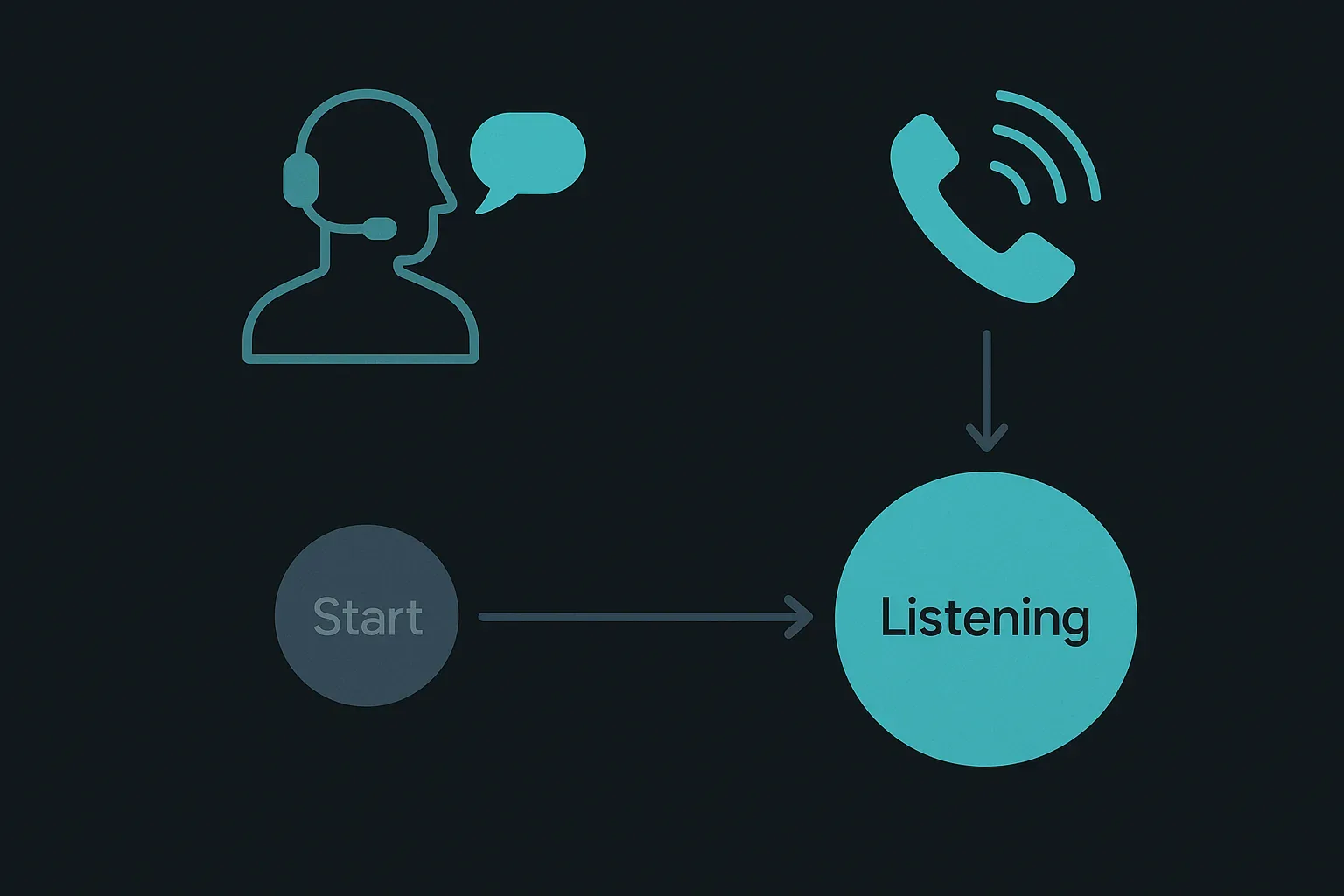
Wake Word And Barge-In (Letting Callers Actually Interrupt)
A wake word keeps a lightweight listener running underneath whatever the agent is saying, so an interruption is caught the instant it starts, not after the agent finishes its turn. Barge-in is what happens next: the agent stops talking, holds its place, and resumes from the caller's new input — not a script position that no longer matches what was said.
Diarization: Knowing Who Is Talking When Two Voices Overlap
For the brief window where both the agent and the caller are speaking, something has to decide whose words belong to whom — otherwise the transcript, and the next response, are built on a mix of both. Same "who owns this turn" problem a support AI has to solve before handing a conversation to a human.
What We Shipped, Not Just Explained
VitalityLabs' voice Bridge — the AI receptionist stack behind the business, built with the same internal-systems discipline as our other tools — runs detection, echo cancellation, wake word listening, and barge-in as one connected pipeline, not four vendor features bolted together. Its early phases are substantially complete: a working answer to "does barge-in actually work on a real phone line," not a slide describing how it should be. Same standard as running a security list against a live system instead of reading it.
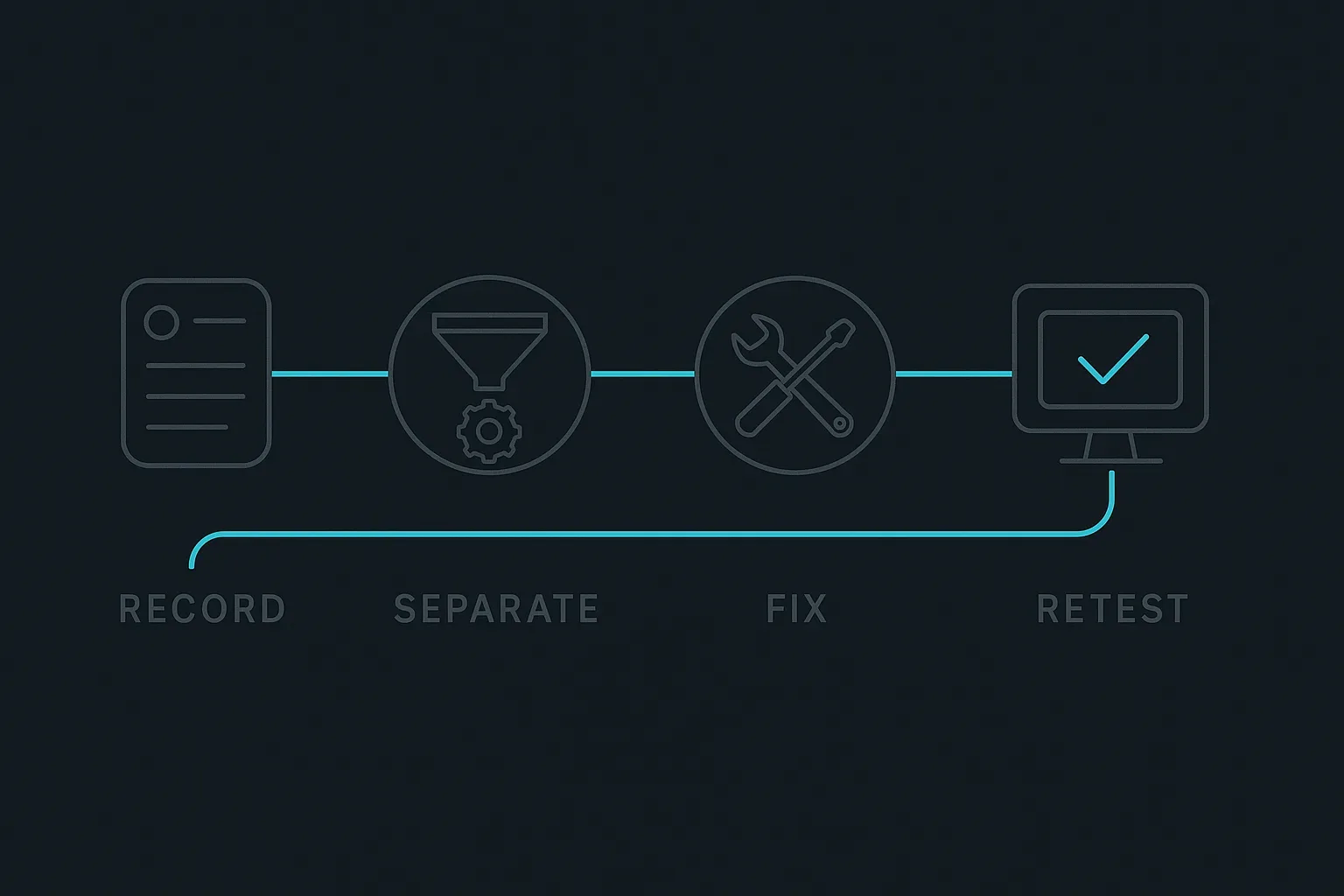
A Four-Week Way To Fix A Robotic-Sounding Agent
Week 1 — Record real calls and tag every place a caller was cut off, ignored, or met with dead air.
Week 2 — Separate the four problems: detection, echo, wake word, or diarization. Each has a different fix.
Week 3 — Fix the highest-frequency failure first, then test it against real recorded calls, not a quiet-room demo.
Week 4 — Re-record and re-tag. If that failure mode is gone but a new one appeared, that's normal — go again.
What To Measure Instead Of "Does It Sound Natural"
- The percentage of calls with at least one bad interruption, tracked weekly.
- Time from caller speech onset to the agent actually stopping — real latency, not a marketing number.
- How often diarization assigns a word to the wrong speaker mid-overlap.
The same discipline behind building something that doesn't quietly fall over applies here — you can't fix a feel, only a number.
If You Want ZPro to Build This With You
At Zdravevski Professionals, an AI & Automation Solutions engagement fixes a voice AI stack at the pipeline level, not the script level. We can:
- record and tag real calls to find exactly where an agent breaks character
- separate detection, echo cancellation, wake word, and diarization into fixable parts instead of one vague "it feels off"
- build or repair the barge-in pipeline against a real phone line, not a demo environment
- hand you a measurable baseline — interruption rate, real latency, diarization accuracy — instead of a subjective "sounds better"