
The Future of AI in Business: Beyond Automation
Artificial Intelligence has become a buzzword in business circles, but many organizations are still struggling to move beyond basic automation. While automating repetitive tasks provides immediate value, the true potential of AI lies in its ability to augment human intelligence and enhance decision-making processes.
If you're interested in how AI can support knowledge capture and decision-making across an entire organization, you can also explore our article on AI second brains at work.
The Evolution of AI in Business
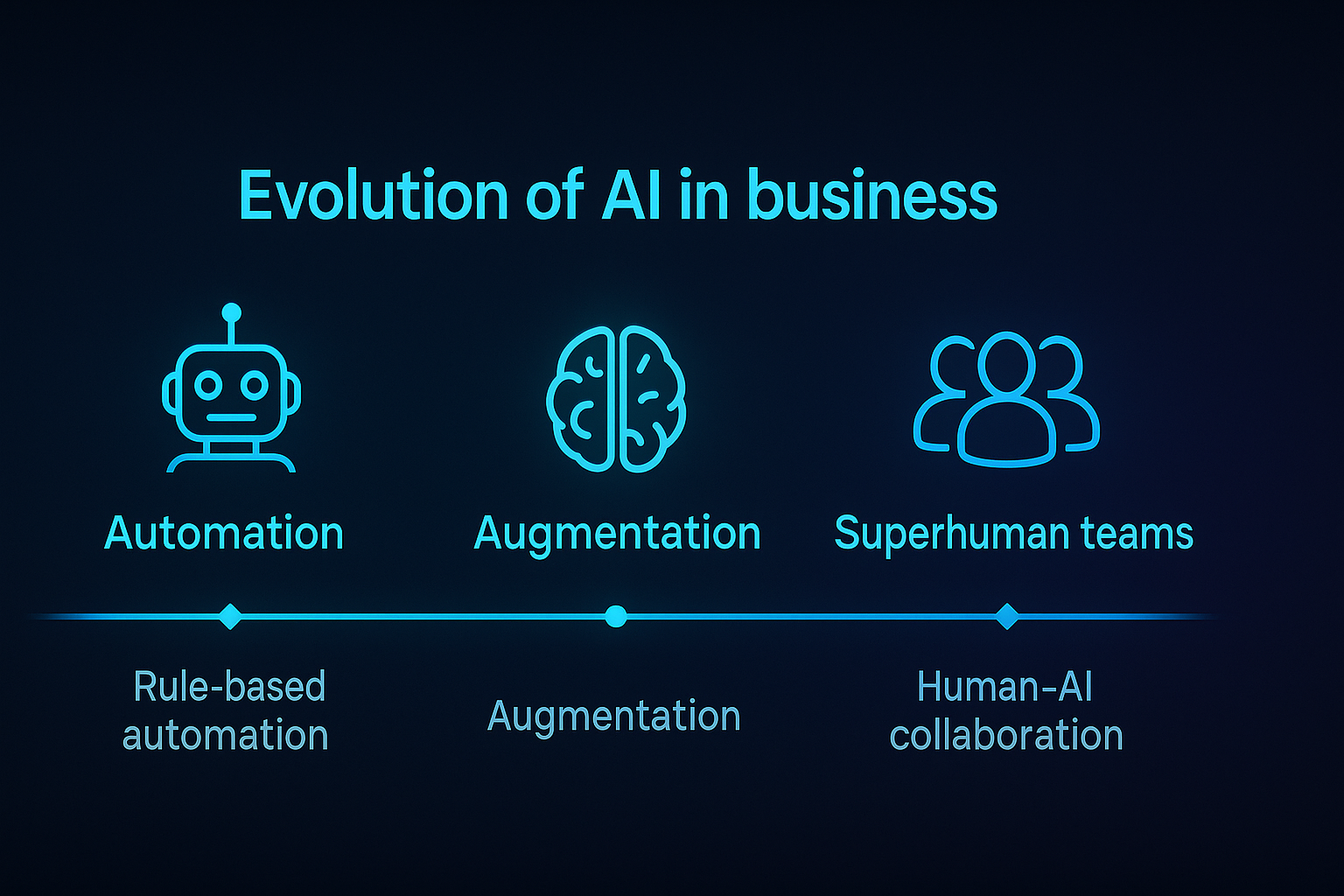
The first wave of AI in business focused primarily on automation—replacing human labor in repetitive, rule-based tasks. This approach has delivered significant efficiency gains and cost reductions. However, we're now entering a second wave where AI systems are becoming partners in creative and strategic thinking.
Augmenting Human Intelligence
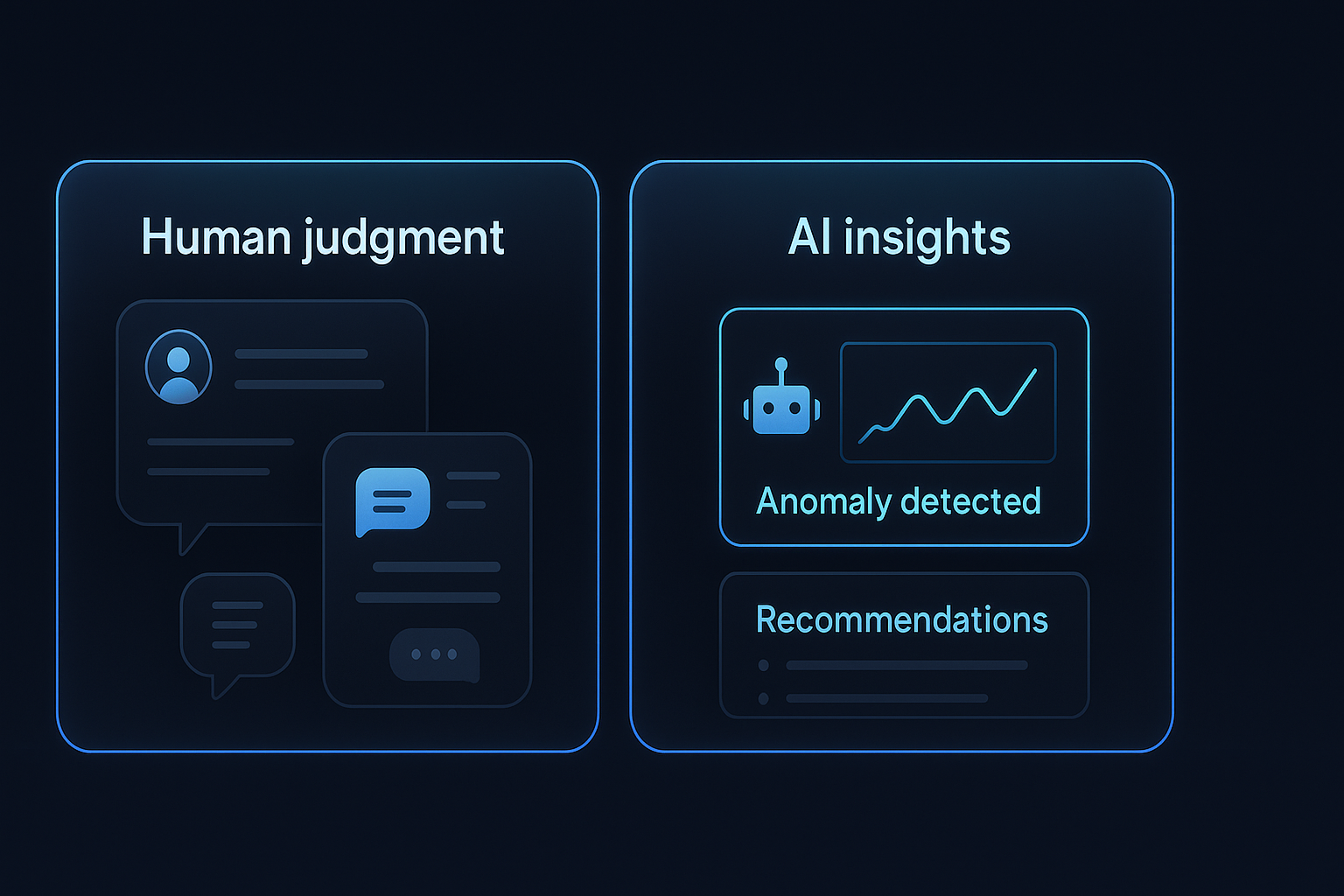
Rather than viewing AI as a replacement for human workers, forward-thinking organizations are exploring how AI can enhance human capabilities. This includes:
- Pattern Recognition: AI can identify subtle patterns in vast datasets that humans might miss
- Scenario Modeling: AI can simulate thousands of potential outcomes to inform strategic decisions
- Creative Inspiration: AI can generate novel ideas and approaches that spark human creativity
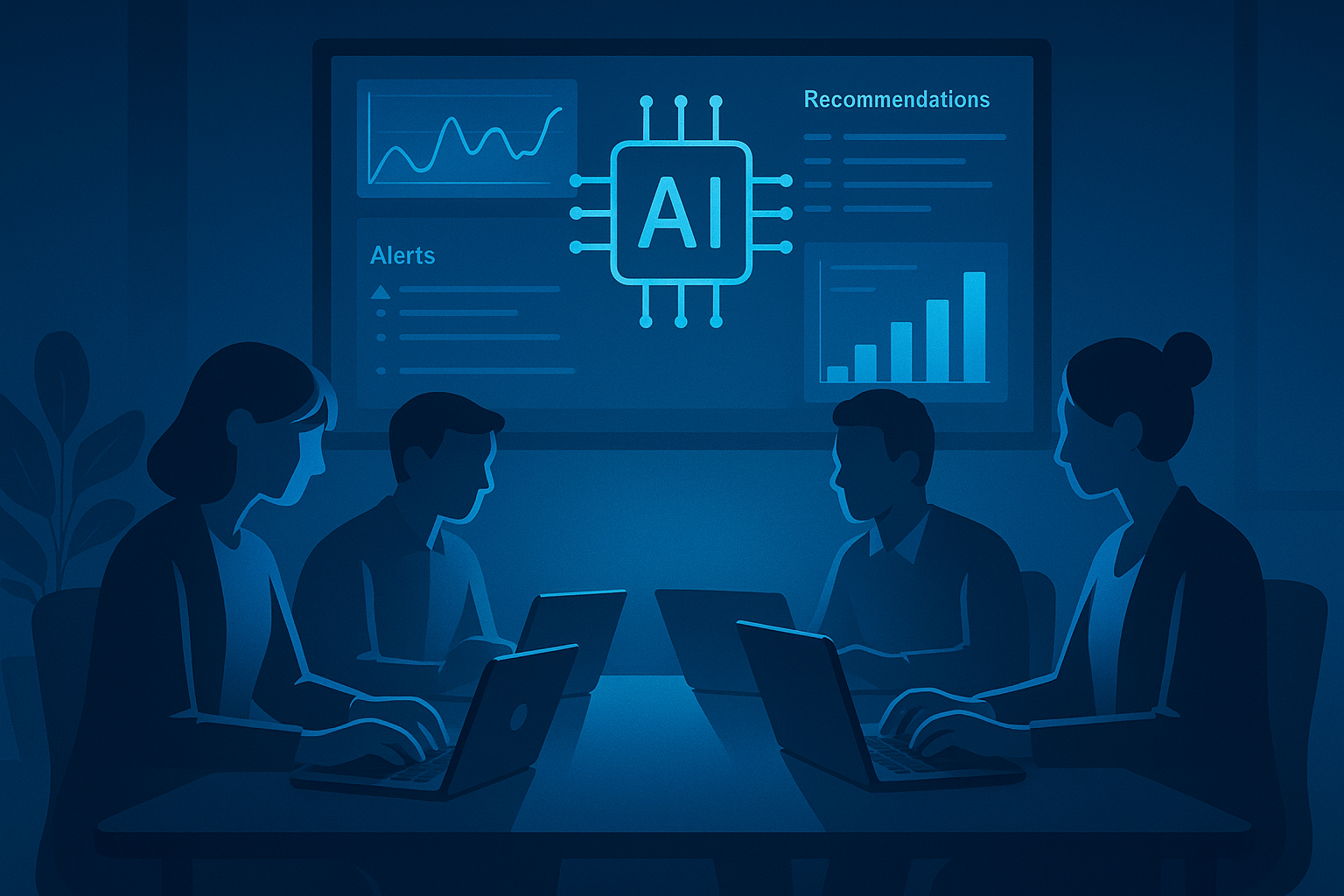
- Decision Support: AI can provide real-time insights and recommendations during complex decision-making processes
Practical Applications
Several industries are already seeing the benefits of this augmented approach:
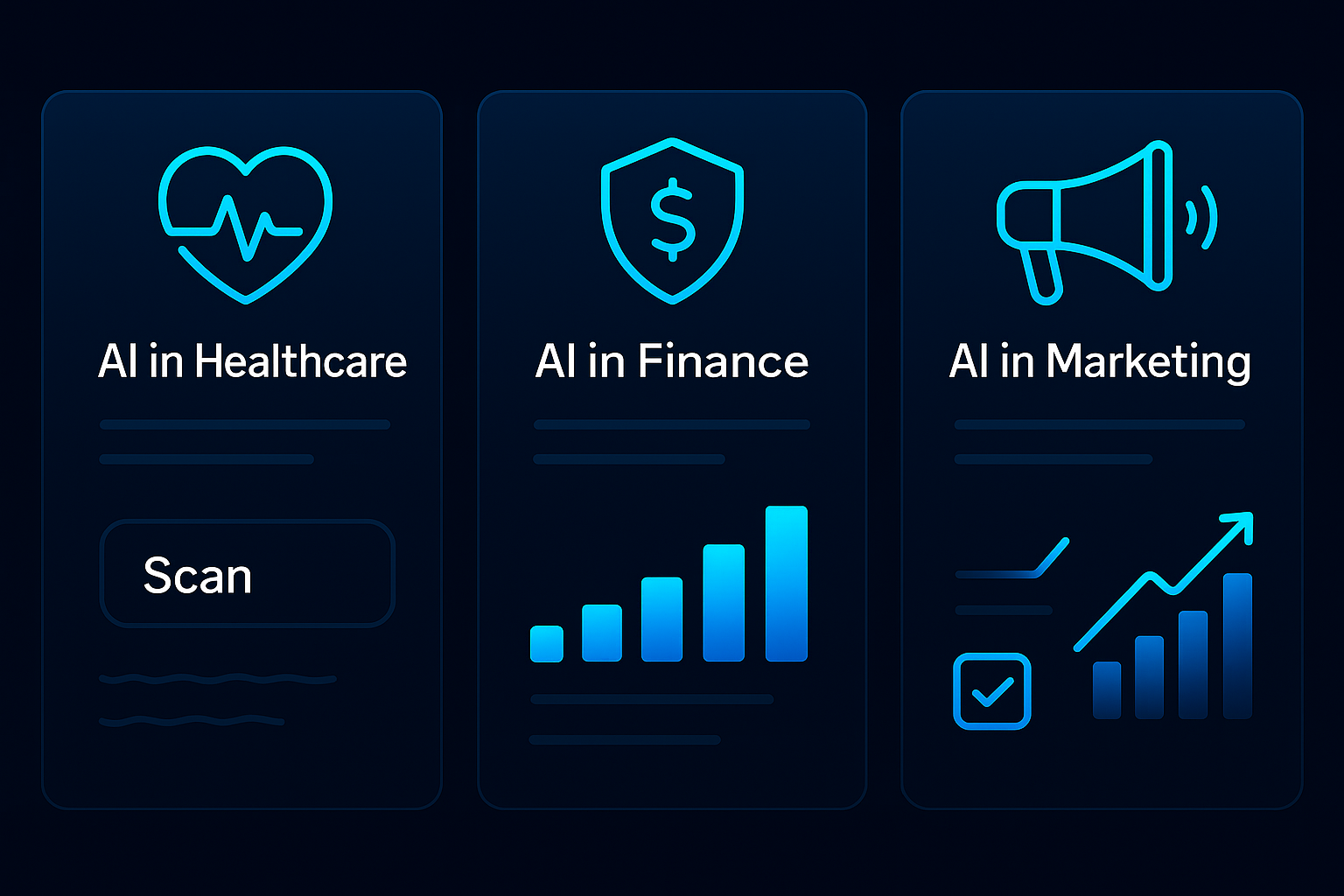
In healthcare, AI systems assist doctors in diagnosis by analyzing medical images and patient data, but the final diagnosis and treatment plan remains with the human physician.
In finance, AI models can detect fraudulent transactions in real-time, but human analysts provide the context and judgment needed to investigate and respond appropriately.
In marketing, AI can analyze customer behavior patterns and predict preferences, but human marketers craft the creative campaigns that resonate emotionally with audiences.
If you're building digital products that need to withstand rapid change, our article on resilient digital products dives deeper into how to architect systems that can evolve alongside your AI strategy.
Implementation Challenges
Moving beyond automation requires a shift in mindset and approach. Organizations must:
- Redefine Roles: Focus on tasks that require human creativity, empathy, and strategic thinking
- Invest in Training: Help employees develop skills that complement AI capabilities
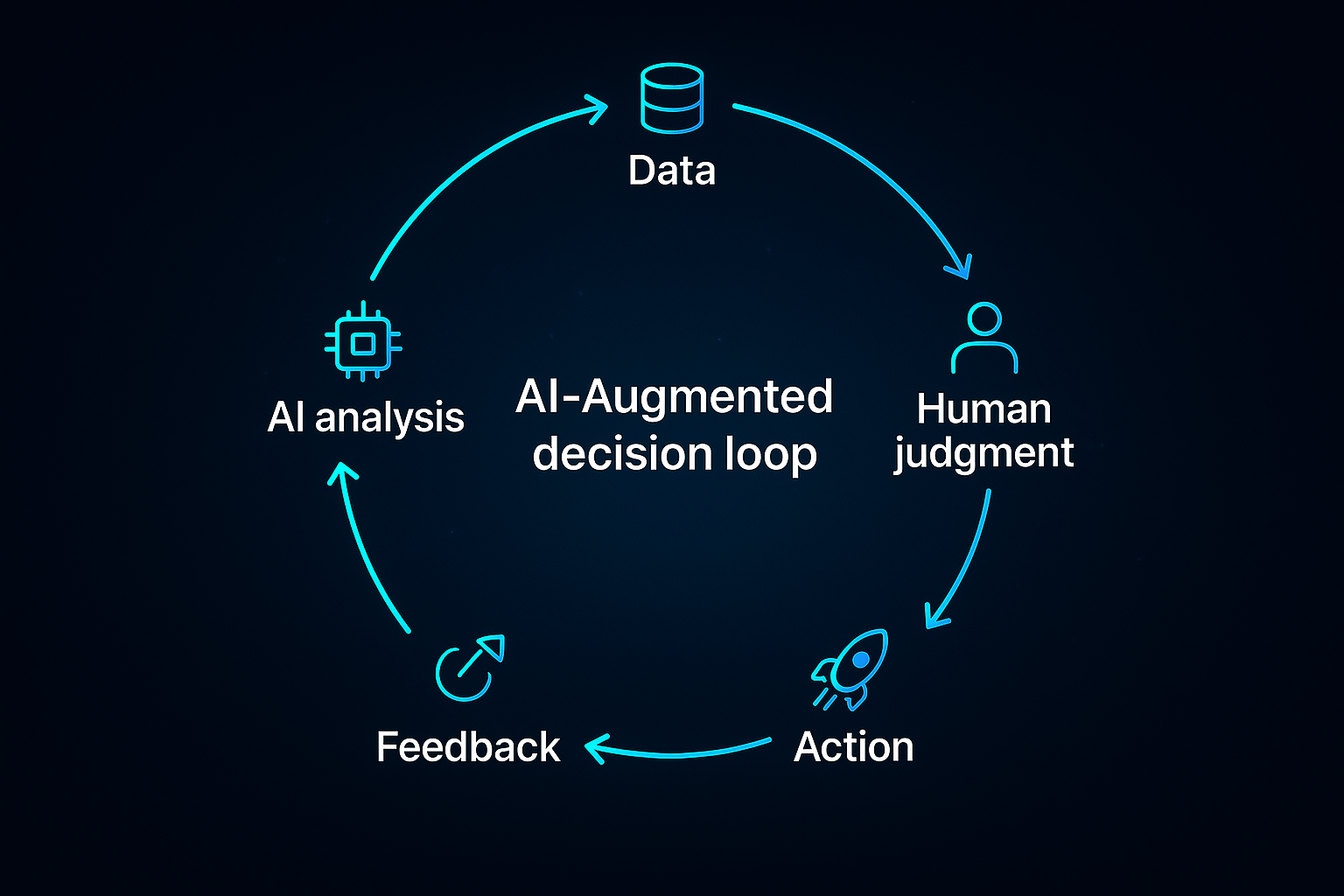
- Design for Collaboration: Create systems where humans and AI can work together effectively
- Measure Differently: Look beyond efficiency metrics to measure creativity, innovation, and strategic impact
Strategic use of AI rarely happens by accident. A structured approach, like the one we outline in our strategic problem-solving framework, helps teams decide where AI adds real leverage—and where it doesn’t.
The Future of Work
As AI capabilities continue to expand, the most successful organizations will be those that find the right balance between automation and augmentation. This means creating workflows where AI handles the data processing and pattern recognition while humans provide the creativity, judgment, and strategic thinking that machines cannot replicate.
The future of AI in business isn't about replacing humans—it's about creating superhuman teams where the combination of human and artificial intelligence produces results that neither could achieve alone. For remote and distributed teams, pairing AI with a strong remote-first culture is often the difference between chaos and clarity.
Conclusion
The question isn't whether AI will transform business, but how quickly organizations can adapt to this new paradigm. Those that focus solely on automation will find themselves at a competitive disadvantage compared to those that embrace AI as a tool for augmenting human intelligence and creativity.
The future belongs to organizations that can successfully blend human insight with artificial intelligence to solve complex problems and create innovative solutions.