
Freelancer, Agency, or Fractional CTO? How to Actually Decide
You don't actually want to hire a developer. You want a problem to go away.
The old approach to that decision was: post a job, compare day rates, pick whoever answers first. The better approach is: figure out what kind of problem you actually have, then match the hiring model to it.
If you've read our piece on building a team that works well remotely, you already know structure matters more than headcount. The same is true here — the label on the contract (freelancer, agency, fractional CTO) matters far less than what you actually need someone to own.

The Real Question You're Actually Asking
Nobody wakes up wanting "a freelancer" or "an agency." They wake up with one of three problems: something specific needs building, something ongoing needs running, or something important needs deciding and nobody in the room is qualified to decide it. Match the problem to the hire, and the debate mostly answers itself.
What a Freelancer Actually Gives You (and Where It Breaks)
A good freelancer is fast, direct, and cheap relative to the alternatives. You talk to the person doing the work, not an account manager translating your request into someone else's task list.
- Best for: a scoped, well-defined piece of work with a clear finish line.
- Breaks when: the scope isn't actually clear yet, when they get sick or busy, or when the project needs more than one skill at once (design, backend, infrastructure) and you end up managing three separate freelancers yourself.
What an Agency Actually Gives You (and Where It Breaks)
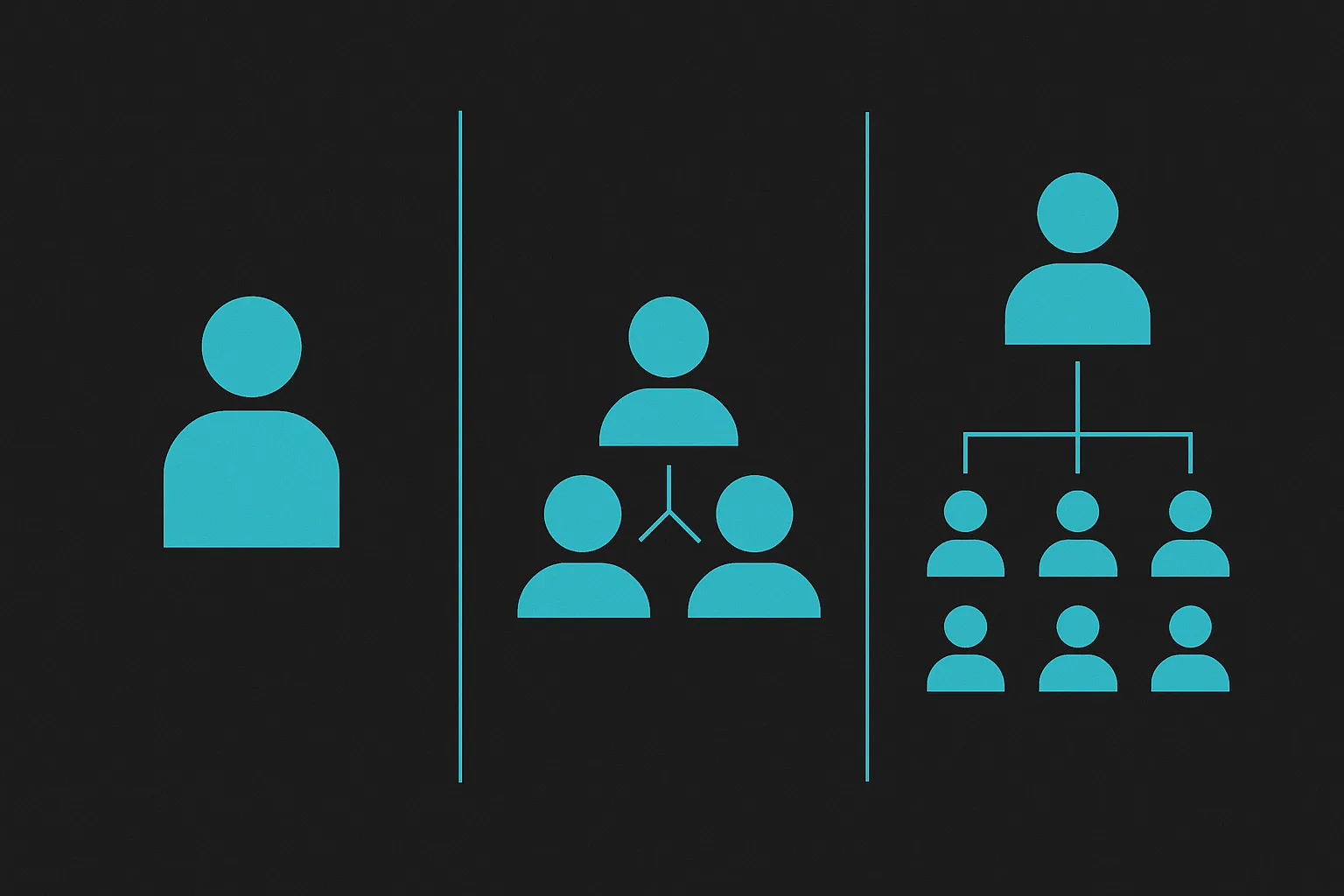
An agency gives you a team without hiring one — project management, multiple skill sets, and someone accountable if a person quits mid-project.
- Best for: a defined project that's bigger than one person, especially with a hard deadline.
- Breaks when: you need someone who understands your business, not just this quarter's ticket list — agencies are built to execute a brief, not to challenge whether it's the right brief.
What a Fractional CTO Actually Gives You (and Where It Breaks)
A fractional CTO has actually run engineering before — as a CTO, not just built things — showing up part-time to own decisions you're not equipped to make yourself: what to build first, who to hire, when to say no. It's the same ownership we describe in a practical policy for who decides what, applied to one hire instead of a whole team.
- Best for: the point where technology decisions are business decisions, and getting them wrong is expensive.
- Breaks when: you just need a website built by Friday. That's not a strategy problem, and paying strategy rates for execution work is how budgets die quietly.

The Question That Actually Decides It
Here's the shortcut: if you already know exactly what needs building, hire whoever builds it fastest. If you don't — if you're unsure what to build, in what order, or whether the last advice you got was even right — you need judgment before you need hands. Same shift we cover in where AI actually changes business decisions: the hard part usually isn't the doing.
A freelancer and an agency answer "how do we build this." A fractional CTO answers "should we build this, and what happens if we're wrong."
A Simple Way to Score Your Situation
Ask yourself, honestly:
- Is the scope actually clear? If you could write it as a numbered spec today, lean freelancer or agency.
- Is this a one-time project or an ongoing concern? One-time and bounded leans project-based hiring. Ongoing and strategic leans fractional.
- Would a wrong technical call cost you real money or time? If yes, someone needs to own that call — not just execute around it. The same logic shows up in how we think about software that has to hold up over time: the earlier the wrong call gets made, the more expensive it is to unwind.

What Nobody Tells You About Switching Later
You're not locking yourself in. A common path is a fractional CTO for the first few months to set direction, then a freelancer or agency to execute once it's clear. The mistake is doing it backwards — building first, then hiring judgment to explain why it doesn't work. Our framework for tackling hard problems covers the same idea: define the problem before you commit to a solution.
How to Test Any Option Before You Commit
- For a freelancer: start with one small, real task first. You'll learn more from how they handle a genuine problem than from any portfolio.
- For an agency: ask who specifically will do the work, not who's in the sales call. The team pitching you is rarely the team building for you.
- For a fractional CTO: ask what they'd say no to. Someone who agrees with everything you propose isn't giving you judgment, just agreement.
A Two-Week Way to Decide Without Guessing
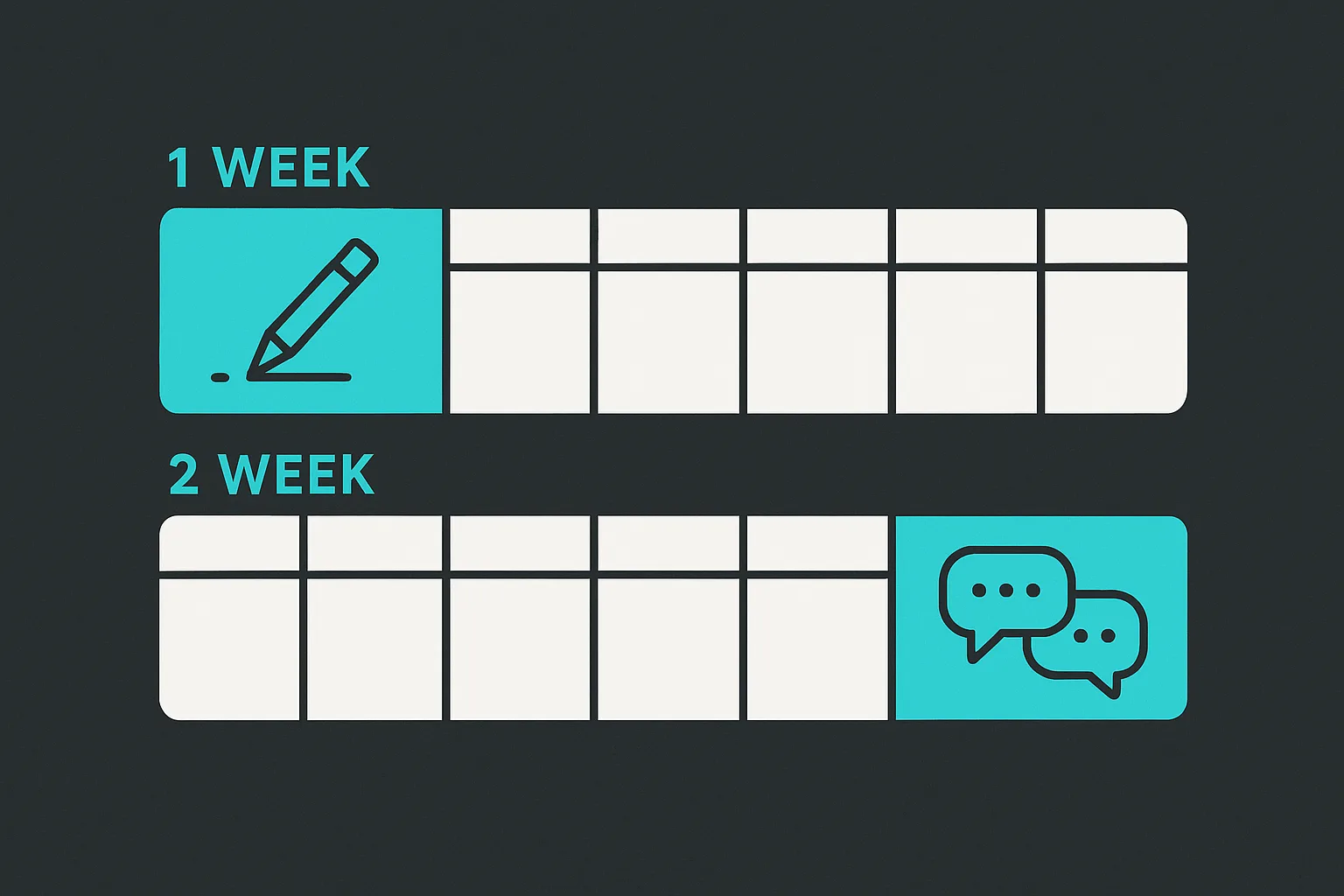
Week 1 — Write down the actual problem in one paragraph, no jargon. If you can't, that's your answer: you need judgment first, not hands.
Week 2 — Take that paragraph to one freelancer, one agency, and one fractional CTO conversation. Compare not their prices, but how each one restates your problem back to you. The one who understands it best usually is the right fit, regardless of label.
What to Watch After You Hire
- Whether decisions are getting made, or just deferred to the next call.
- Whether you understand the reasoning, not just the recommendation — a good partner explains, they don't just declare.
- Whether knowledge is staying with you, not walking out the door with them — the same reason we build internal knowledge systems for clients, not just deliverables.
- Whether the relationship scales down as easily as it scaled up — a healthy engagement doesn't lock you in past the point it's useful, and leaves you with more clarity, not less.
If You Want ZPro to Build This With You
At Zdravevski Professionals, we sit deliberately in the middle of this decision — a small studio with real specialists, run by someone who's been the freelancer, run agency-style teams, and held the CTO and CEO seats himself. We can:
- scope a project and simply build it, freelancer-style, when the scope is genuinely clear
- run it agency-style with the right specialists when it's bigger than one person
- sit in the fractional-lead seat when the real gap is judgment, not hands